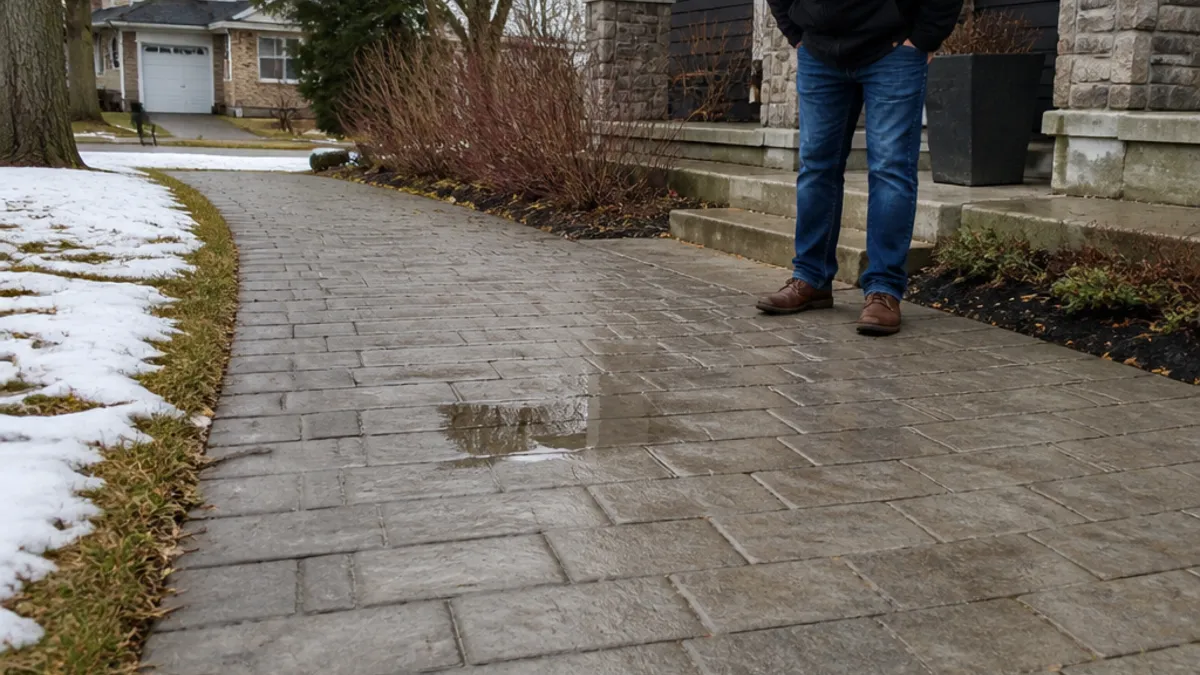
Short answer: Interlock pavers usually sink because the material beneath them has settled, shifted, or lost support; water and freeze-thaw movement can make an existing weak spot more noticeable in Ottawa. A lasting repair identifies why the area moved, corrects the supporting base or drainage where needed, then resets sound pavers. Adding sand on top does not rebuild a failed base.
A shallow dip in a patio may seem cosmetic until it holds water, opens joints, catches a snow shovel, or creates a trip edge. The useful question is not only “How do I level these pavers?” but “What is allowing this section to move?” This guide helps homeowners document the change, understand common causes, and compare a safe maintenance task with work that calls for an interlock contractor. It does not replace an on-site assessment or diagnose a drainage problem affecting a building.
What are the first signs an interlock area needs attention?
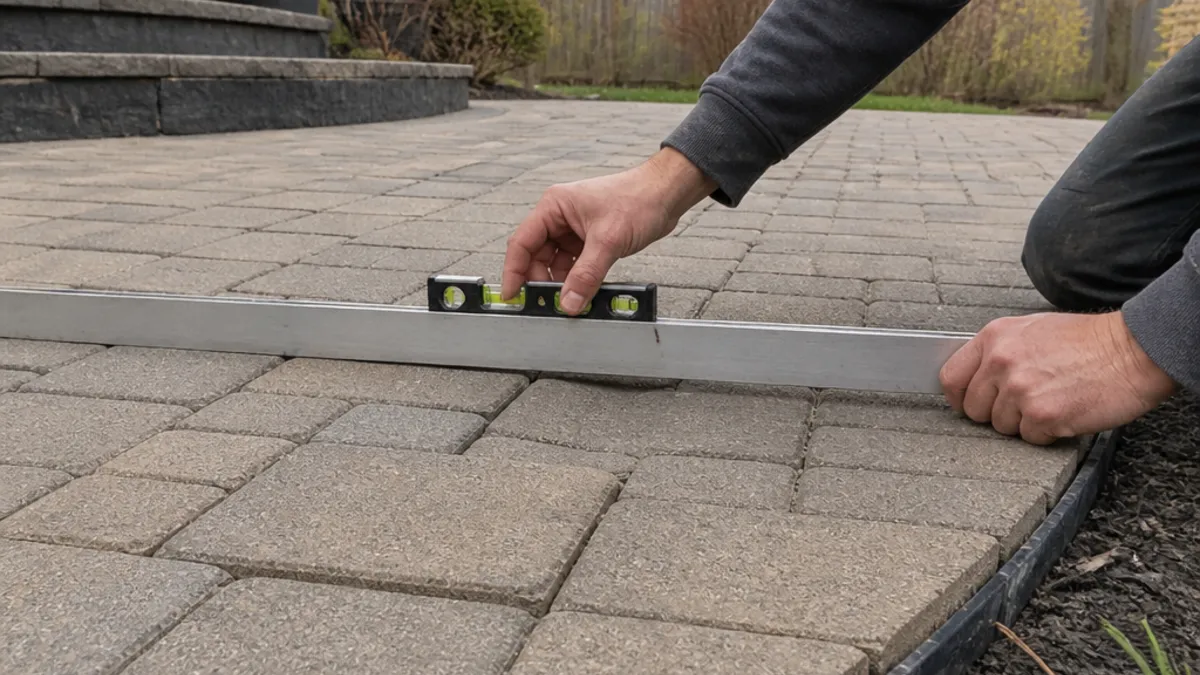
Look for a change from the surrounding surface: a shallow bowl that holds water, a line of pavers that has dropped, a spreading gap, an edge that has moved outward, or a noticeable rocking paver. Record where the low spot begins and ends, whether it crosses a vehicle path, and whether the same area looked different before winter. A straightedge laid across the surface can help reveal a change in plane, but it cannot tell you what is happening below the pavers.
Take photographs from the same direction and at a similar distance after rain or snowmelt. Include a wide shot so the location is clear and a close-up that shows joints and edges. Do not mark the pavers with permanent paint or drill into them; removable tape or a photo note is enough. If the spot is a trip hazard, keep people away from the affected path until it can be assessed, and avoid driving over a visibly unstable section.
Why do interlock pavers sink or shift?
Base or subgrade settlement
Interlocking pavers transfer loads through the surface and supporting layers. If the soil below was not prepared adequately, the base material was not compacted consistently, or the layers changed in depth across the site, the surface can settle unevenly. A localized low spot near a trench, addition, utility repair, or former excavation may indicate that the ground below was disturbed. A repair that resets pavers without addressing the loose or settled support may sink again.
Water moving through or under the pavement
Water can soften or carry fine material from the supporting layers when runoff is concentrated or an outlet discharges onto the pavement. A leak, downspout, or slope that holds water can create a recurring wet area. Not every wet spot means the base has washed away, but the flow path matters. The Canadian Concrete Masonry and Hardscapes Association (CMHA) notes that interlocking pavement performance can be affected by design, materials, construction, and maintenance. Its operation and maintenance guide for interlocking concrete pavement explains routine inspection and maintenance practices.
Weak or displaced edge restraint
Edges help keep the paver field from spreading sideways. If the restraint has loosened, shifted, or lost support, joints can widen and pavers near the perimeter may drift. This often appears as a line of movement rather than one isolated depression. Simply sweeping more sand into the joints can improve a small maintenance issue, but it will not secure a failed edge.
Joint material loss and surface wear
Joint sand can wash or blow out, especially where water runs across joints or cleaning removes material. Empty joints may allow more movement between pavers, but sand loss does not automatically explain a deeper low spot. Check whether the pavers are level or whether the whole supporting surface has moved. Follow the paver and joint-product manufacturer’s instructions before adding sand or applying a sealer.
Roots, loads, or previous repairs
Tree roots may lift and redirect paving, while a concentrated load can expose a weak area. A previous patch may also settle if it was built over disturbed soil or if its edge was not tied into the surrounding pavement. If movement follows a utility trench, construction area, or retaining edge, tell the contractor; that history can help focus the inspection.
How can Ottawa’s freeze-thaw season affect an interlock surface?
Ottawa’s winter brings freezing temperatures, snow, thaw periods, and runoff. Water that remains in joints or around the pavement can freeze and expand; repeated seasonal movement can make an existing weakness more visible. Freeze-thaw conditions are part of the context, not a complete diagnosis: poor drainage, soil movement, a weak edge, or inconsistent support can still be the underlying issue.
Spring is a practical time to observe the pavement because snowmelt and rain make drainage paths easier to see. Note where water sits, how long it remains, and whether it flows toward a foundation, garage, or neighbour’s property. Do not assume that adding a drain or changing the grade is automatically allowed or suitable. Ottawa’s Landscaping Education Guide is a starting point for local landscaping considerations; check current City guidance for the specific property and proposed work.
Snow-removal tools and de-icing products also deserve attention. A sharp metal shovel can catch edges, and an unsuitable salt or chemical may affect adjacent vegetation or materials. Techo-Bloc’s paver care and maintenance guidance advises homeowners to consult care instructions for cleaning and snow or ice management. The correct method depends on the paver and product; do not assume that pressure washing or every de-icer is harmless.
What can you check before requesting an interlock repair?
A homeowner can gather useful evidence without lifting pavers. Keep to these non-invasive checks:
- Map the area. Photograph the full driveway, walkway, or patio and mark the changed area on a copy of the photo.
- Check after water events. Note whether the depression holds a puddle after rain, receives roof runoff, or stays wet longer than nearby pavers.
- Look at the edges. Check for widening joints, a line that has spread, loose border units, or visible separation from a wall or step.
- Compare the surrounding grade. Observe where surface water naturally travels. Do not dig near underground services or alter the slope before confirming what is safe and appropriate.
- Record what changed. Note any nearby excavation, downspout change, new heavy load, root growth, or repair that happened before the settlement appeared.
- Check for a safety issue. If there is a sharp height difference, movement underfoot, or water entering a structure, limit use and seek an appropriate professional assessment.
Interlock repair decision path
This decision path is general guidance. Site conditions and paver-system requirements vary.
What should a lasting interlock repair include?
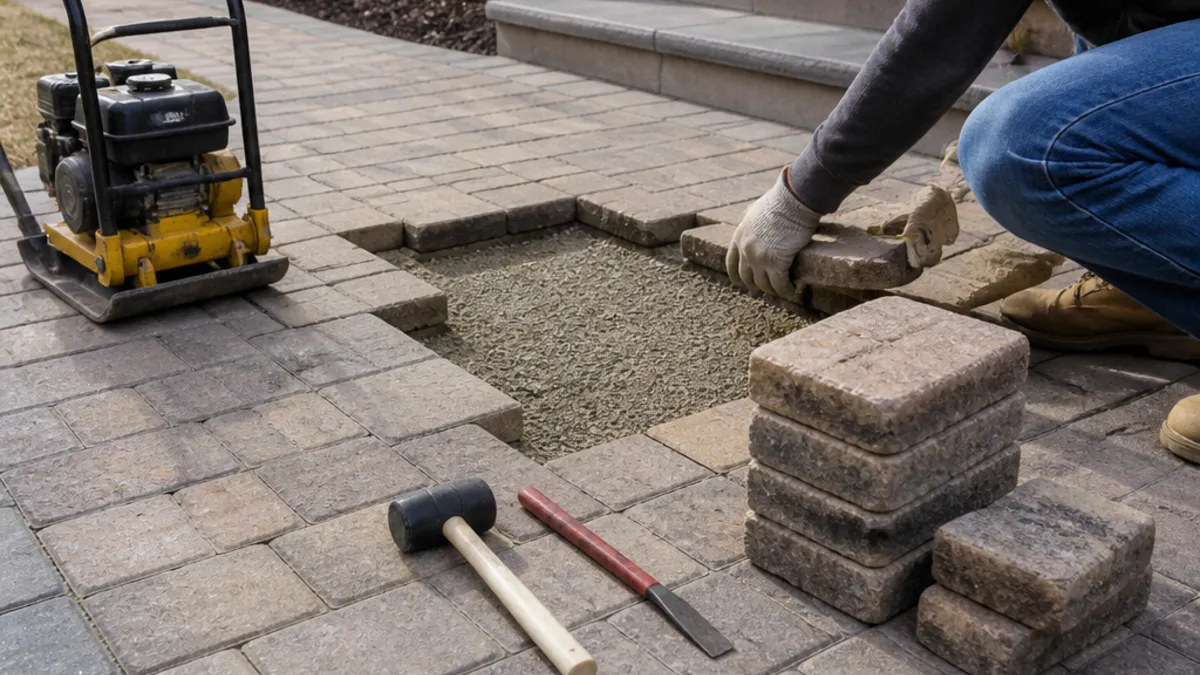
The scope depends on the location and extent of movement. For a localized repair, a qualified interlock contractor may remove and preserve reusable pavers, inspect the supporting layers and edge, correct the failed area, then relay the pavers and replenish joints. The written scope should identify what will be checked and what happens if the underlying condition extends beyond the visible dip.
1. Find the boundary of the problem
Movement can extend beyond the puddle or visibly sunken pavers. A contractor should check surrounding pavers, edge restraint, steps, walls, drains, and transitions. The repair footprint needs to be large enough to reach stable material and reconnect cleanly to the existing pattern; the appropriate size cannot be determined from a photo alone.
2. Inspect the supporting surface and drainage
After pavers are lifted, the contractor can examine bedding material and base condition, look for evidence of water movement, and determine whether the subgrade needs attention. CMHA’s construction guidance for interlocking concrete pavements describes the role of subgrade preparation, aggregate base, bedding, pavers, and edge restraints. The exact design, depth, aggregate, and compaction method depend on use, soil, climate, and site conditions; this guide does not prescribe a universal measurement.
3. Correct the cause before relaying
If the repair finds a poor outlet, failed edge, disturbed fill, or drainage issue, the scope should explain the proposed correction and any limits. Work near a foundation, utility, retaining wall, or property boundary may require separate expertise or approvals. Ask how the repair will preserve intended drainage and how the contractor will handle any hidden condition before authorizing a change in scope.
4. Reinstall and check the finished area
Sound pavers can often be reused when their condition and pattern allow it. The repair should restore a stable, even walking or driving surface, address joint material, and leave the surrounding area tidy. Ask what care is needed immediately after the work, when the surface can be used, and which product instructions govern sand, cleaning, and sealing.
ThinLine Painting’s website lists interlock installation and repair in Ottawa, including assessment of settled or uneven areas. You can review its interlock repair services in Ottawa when comparing contractors and written repair scopes. This article is published by Contractor Genie and does not imply a partnership or independent endorsement.
Which interlock maintenance can you do yourself?
Routine sweeping, removing leaves, and taking photographs are usually low-risk homeowner tasks. If only joint material is low and the pavers remain level and stable, follow the manufacturer’s instructions for the system before topping up. CMHA recommends spring and fall preventive maintenance, including removing debris and paying attention to joint sand; its guide cautions that cleaning methods can remove joint material. Use a gentle method and avoid blasting joints with a pressure washer unless the paver system’s instructions say how to do it safely.
Do not try to disguise a sinking surface by dumping sand over it, hammering a rocking paver back into place, or lifting a large area without a plan. Those actions can leave the cause in place, create a higher edge, or disturb the pattern and drainage. Interlock repair is better handled by a contractor when pavers have settled, an edge has moved, water repeatedly pools, vehicle loads are involved, or the repair reaches a step, retaining wall, foundation, or underground service.
If pooling may be affecting the house, an interlock contractor may not be the only professional to consult. Water entering a basement, persistent dampness, foundation movement, or damaged wall materials needs its own building or drainage assessment. A surface repair should not be represented as a cure for a concealed building-water problem.
For wider hardscape decisions, see Contractor Genie’s Ottawa driveway paving guide. If the low pavers appear to keep the bottom of a wall wet or stained, our guide to peeling exterior paint in Ottawa explains why the water source should be addressed before repainting. These are related homeowner checks, not claims that one repair automatically solves the other problem.
How can seasonal care help reduce repeat movement?
Inspect the surface in spring and fall, especially after a winter with repeated thaws or a season with heavy runoff. Sweep leaves and debris away, look for new joint gaps or edge movement, and check that downspouts discharge away from the pavement. CMHA’s guide recommends routine spring and fall maintenance for interlocking concrete pavement and notes that excessive cleaning or concentrated runoff can contribute to joint-sand loss. Do not treat a maintenance interval as a guarantee against settlement.
- Keep gutters and downspouts clear and check that extensions have not shifted.
- Remove standing debris that traps moisture or blocks a drainage opening.
- Use the paver manufacturer’s instructions for cleaning, de-icing, and sealing.
- Avoid moving heavy equipment across a surface that already rocks or has a low spot.
- Photograph a changed area and have recurring movement assessed before the next major repair.
Sealer is not a structural repair. A coating may change appearance or make some stains easier to remove, but it cannot rebuild a settled base or secure a displaced edge. Ask the product manufacturer and installer whether sealing is suitable for the paver type and local conditions, and follow the specified preparation and cure instructions.
When should you repair a section instead of replacing the whole surface?
A localized repair may be practical when movement is limited, surrounding pavers are sound, the cause can be corrected, and matching material can be reused or sourced. More extensive work may make sense when settlement recurs in multiple areas, the edge system is failing broadly, the drainage plan is unsuitable, or the pavers are damaged beyond reuse. A contractor should explain why the proposed boundary is appropriate rather than recommending a complete replacement by default.
Ask whether the existing pattern can be lifted and relaid, what may break during removal, whether matching units are available, and how the repaired area will transition to older pavers. Compare the cost and disruption of a localized repair with the benefit of correcting a wider underlying problem. No reliable replacement recommendation can be made without examining the site and the pavement layers.
What should an Ottawa interlock repair estimate explain?
- The exact area to be lifted and whether adjacent pavers are included.
- How the contractor will inspect and address the base, subgrade, drainage, and edge restraint.
- Which existing pavers are expected to be reused and what happens if units break.
- How slopes and transitions will be checked without redirecting water onto a building or neighbouring property.
- How unexpected conditions will be documented, priced, and approved before added work proceeds.
- Which joint material, cleaning method, and any optional sealer are proposed.
- What access, protection, cleanup, and post-repair care are included.
Useful photos help, but they do not replace a site visit where the pavers move or water is collecting. A clear written scope makes it easier to compare contractors without treating a low price as proof that the underlying cause will be fixed.
Frequently asked questions
Why are my interlock pavers sinking in Ottawa?
Common causes include settlement in the supporting layers, water moving through the pavement, a displaced edge restraint, disturbed soil, or a previous repair that did not reach stable material. Ottawa’s freeze-thaw season can make an existing weakness more noticeable, but the specific cause needs to be checked on site.
Can one sunken area be repaired without replacing all the pavers?
Often a localized area can be lifted and reset if the surrounding pavement is stable and the cause can be corrected. If movement is widespread or drainage and edge support are failing across a larger area, the repair boundary may need to expand.
Will adding sand level a sunken interlock area?
No. Joint sand is for joints, not for rebuilding a settled base or leveling a depression. Adding material on top may hide the surface change briefly while leaving the support problem untouched.
Should I pressure wash interlock pavers?
Only if the paver and joint-material instructions allow it and you can use a method that does not remove joint sand or damage the surface. CMHA warns that cleaning can disturb joint material; a broom or gentle cleaning may be more appropriate.
When should I inspect interlock after winter?
Check the surface during spring cleanup and again in fall, particularly after thaw and heavy rain. Note new low spots, open joints, edge movement, or pooling and compare photographs from earlier inspections.
Can a paver repair fix water entering my basement?
Not necessarily. Interlock grading can be one part of surface-water management, but water entering a building may involve foundation, drainage, or wall conditions that require a separate assessment by an appropriately qualified professional.
Sources and further reading
- Concrete Masonry & Hardscapes Association: operation and maintenance guide
- Concrete Masonry & Hardscapes Association: construction of interlocking concrete pavements
- Techo-Bloc: paver care and maintenance
- City of Ottawa: Landscaping Education Guide
- Environment and Climate Change Canada: Canadian Climate Normals
This guide offers general homeowner information. It does not set a universal installation specification, confirm permit requirements for a particular property, or diagnose foundation or drainage conditions.
Fix the support and water path—not just the visible dip
Photograph the change, observe where water travels, and compare written repair scopes that explain how the base, edge, and drainage will be assessed. The best next step depends on what is below the pavers and how the surface meets the rest of the property.
For broader project planning, read Contractor Genie’s Ottawa driveway paving guide or request a project quote.